
Reading Businesses, Not Markets: Inside Kenneth Andrade’s Approach to Stock Picking
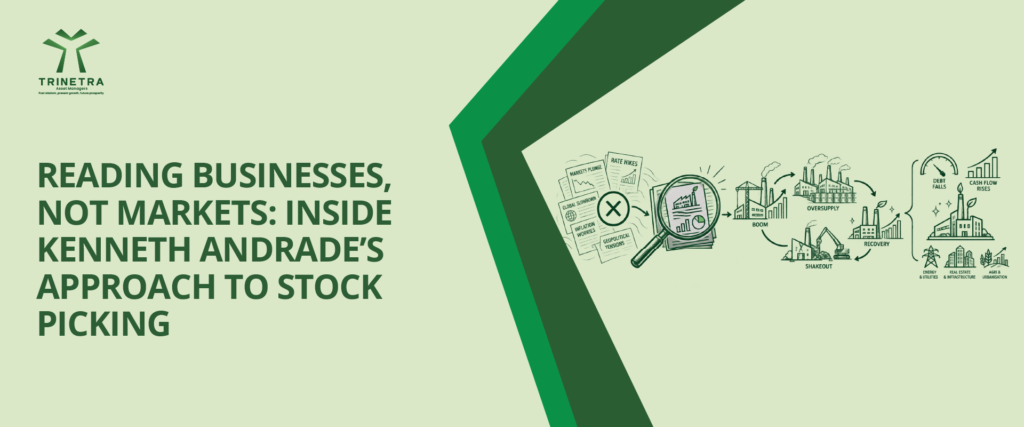
How one of India’s best known fund managers uses the capital cycle to find value in industries nobody wants.
Andrade’s framework starts with the business, not the macro. He looks for industries that have been through long, painful downturns and emerged with fewer, stronger players, buys businesses where cash flow is improving and debt is falling, and waits for the market to catch up. The hard part isn’t understanding it. It’s sitting through the discomfort.
Who he is and what makes his approach different
Kenneth Andrade has spent roughly three decades in Indian capital markets. He worked at Sharekhan and then Kotak before joining IDFC Asset Management in 2007, where he rose to Chief Investment Officer and managed IDFC Premier Equity, one of India’s largest equity funds by assets at the time. He left in 2015 and founded Old Bridge Capital Management that December.
In January 2024, Old Bridge Mutual Fund launched its first scheme, the Old Bridge Focused Equity Fund, returning Andrade to the mutual fund business after nearly a decade away. The fund’s stated mandate is a useful summary of his thinking: a maximum of 30 stocks, a buy and hold approach, and a focus on companies with low debt and high capital efficiency.
What sets him apart is where he chooses to focus attention. While most market participants spend their energy guessing at interest rates, GDP prints or election results, Andrade stays fixed on individual companies.
That’s the essence of bottom-up investing. You begin with the business itself, its financials, its competitive standing, the dynamics of its industry, and only then widen the lens to the bigger picture. Macro conditions still matter, but they’re never the starting point.
What makes this framework genuinely useful is that it doesn’t ask you to forecast the future correctly. It asks you to understand the present clearly, and to have the patience to let that understanding pay off.
Corrections are part of the weather, not a warning sign
Markets fall sharply every few years. Investors panic and headlines warn of permanent damage to wealth.
March 2020 captured this perfectly. The world was shutting down, equity markets were in free fall, and most people froze. That period turned out to be one of the strongest buying windows in recent memory.
The lesson is that volatility is built into how markets move. If your portfolio is built around businesses with sound balance sheets, manageable debt and genuine earnings, a downturn becomes something you can sit through rather than something that forces you to run.
Investors who react emotionally to every dip end up doing the one thing that hurts most: selling at exactly the wrong time.
Ignore the noise coming from the headlines
There’s always a reason to stay out of the market. Rates are too high. Bond yields are climbing. Foreign investors are pulling money out. Valuations look stretched.
There has never been a moment where the macro backdrop looked entirely clean, and waiting for that moment means waiting forever.
Andrade sidesteps this trap. Instead of guessing when rates will fall or when flows will turn positive, he studies what can actually be assessed with some confidence: the business sitting in front of him.
- Is it generating cash?
- Is its balance sheet getting stronger?
- Is the industry going through structural change that will eventually thin out the competition?
Understanding the capital cycle
One of the most powerful ideas in Andrade’s thinking is the capital cycle. The framework isn’t his own, it’s most associated with Marathon Asset Management and was popularised in Edward Chancellor’s Capital Returns, but his application of it to Indian industry is distinctive.
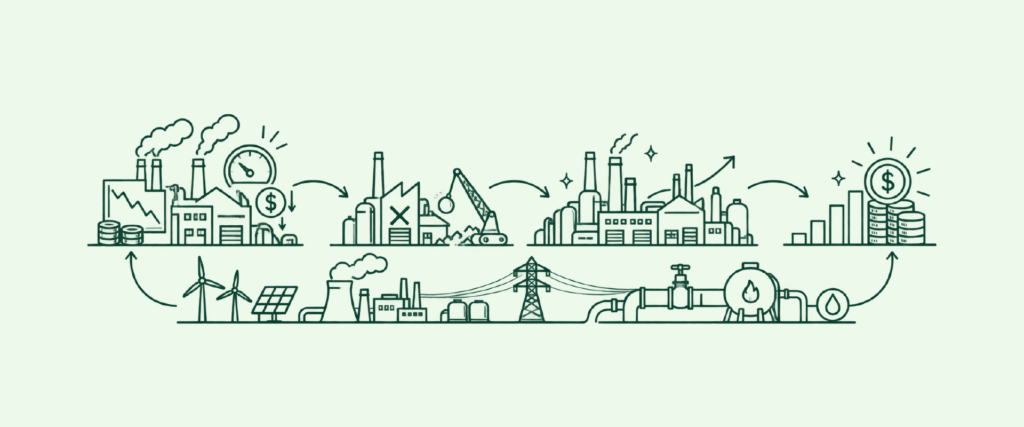
The cycle runs in four stages:
|
Stage |
What happens |
|
1. Boom |
An industry is thriving, so everyone wants in. Companies expand, new competitors pile in |
|
2. Oversupply |
Capital floods the sector until supply outruns demand and profitability collapses |
|
3. Shakeout |
Weak players bleed money and exit. Capacity leaves the system. Can stretch a decade |
|
4. Recovery |
Survivors operate in a rational environment. Pricing improves, margins recover, real cash returns |
What matters is what happens once the shakeout finishes. The survivors operate in a far more rational environment, pricing improves, margins recover, and the businesses left standing start generating real cash again.
The right moment to start paying attention is in the middle of the pain. When nobody wants to touch the industry, when the news flow is uniformly bad, and when the survivors are just beginning to fix their balance sheets.
Why the unloved industries are worth a second look
Industries that have struggled for years become unpopular almost by definition. Investors avoid them, analysts stop covering them, and share prices drift lower for long stretches.
This is exactly where Andrade looks. Once an industry has been through a long downturn and capacity has consolidated into fewer hands, the survivors often gain pricing power they never had before, even while valuations stay low because expectations have collapsed.
If the market had already priced it in, there would be nothing left to capture.
Buying into an unloved business with improving fundamentals feels awkward. Buying a popular name riding high expectations feels safe. More often than not, the better returns sit on the uncomfortable side of that choice.
Manufacturing, energy and the commodity cycle
Manufacturing. Indian manufacturing has swung between optimism and disappointment for years, and the lens here is capacity utilisation. When capacity has left an industry over an extended period and demand starts recovering, the remaining players run at higher utilisation. That’s when margins expand and cash flow genuinely improves.
Commodity-linked manufacturing is especially interesting in this light. These businesses look their worst right at the bottom, with weak pricing, thin or negative margins and heavy debt, yet the cleanup happening underneath sets up a strong recovery once demand returns.
Energy acts as a dependable proxy for broader economic activity. Growing economies mean more factories running, more infrastructure being built, expanding cities, all of which push energy demand higher.
Utilities sit underneath all of this. They’re not exciting businesses, but they’re essential, and essential businesses tend to produce steadier earnings than discretionary ones. Energy becomes an indirect way to participate in the broader economic cycle rather than betting on any single sector.
Commodities are where most investors go wrong, trying to forecast prices shaped by dozens of unpredictable global variables. Andrade avoids that guessing game.
What he watches instead is what a single strong year of cash flow can do to a heavily indebted commodity business. A company that has struggled under debt for years can turn cash rich and debt free within a year or two if prices move favourably even briefly, and that shift genuinely changes the company’s risk profile and its ability to reinvest.
The market is often slow to notice, still anchored to the negative story from the previous cycle while the underlying business has already changed shape.
Balance sheets heal before sentiment catches up
When a stressed balance sheet turns clean, several things happen at once. The cost of capital drops. Management shifts from firefighting to growth. The business can reinvest in itself.
Andrade looks for companies right at the start of this shift, where cash flows are improving and debt is falling but the market hasn’t caught up.
That gap between improving reality and lagging perception is where the returns are made.
Commodity price swings also don’t distribute value evenly. Producers see margins expand while companies using those commodities as inputs see margins squeezed. Tracking how profit shifts across the value chain matters, because an investor who simply extrapolates past earnings and applies a standard multiple will miss how differently tomorrow’s earnings get distributed once the cycle turns.
Chemicals and technology: real stories, priced for perfection
Specialty chemicals, pharmaceutical intermediates and APIs represent a genuine long term opportunity for India as global supply chains diversify. Indian manufacturers have the capability to capture meaningful share.
The caution lies in valuation. Once a theme becomes widely understood, enthusiasm pushes prices well ahead of current earnings, and a good business bought at too high a price can still deliver a disappointing return.
India’s technology sector carries genuine structural tailwinds and a credible path to scale, domestically and globally. The identical concern applies.
When investors get excited, they often pay not just for the next few years of growth but for a decade of optimism baked into the price. If reality falls even slightly short, the stock suffers, because the price assumed nothing would ever go wrong.
Patience matters more than usual with high growth, richly valued names. The right business bought at the wrong price can simply sit still for years.
Where he turns more cautious
Banking and retail lending. Retail credit has expanded rapidly, and rapid growth in lending always raises questions about credit quality and the eventual cost of defaults. Financial services are also highly fragmented, which makes competitive behaviour hard to predict. When lending standards loosen across a crowded field, risk increases quietly and only becomes visible later.
The preference is for lenders with demonstrably disciplined practices over those whose growth story depends purely on expanding credit without matching risk controls.
Platform and digital businesses present a different challenge. These follow winner-takes-most dynamics, where scale sharply improves economics and makes it hard for smaller rivals to catch up. Spotting eventual winners early, before the market fully prices in their scale advantage, is valuable.
But these businesses are usually valued on future potential rather than current earnings, which makes traditional valuation tools difficult to apply. The underlying logic holds, that scale and network effects are real and leaders tend to stay leaders. The question is how much of that future is already sitting in today’s price.
Agriculture, real estate and urbanisation
Agricultural inputs, fertilisers, seeds and farm equipment, together with the broader rural economy, form a large but often overlooked part of India’s growth story. When rural incomes rise and farmers invest in productivity, the entire input chain benefits. These unglamorous businesses can move sharply once rural sentiment shifts, particularly during periods when urban consumption dominates market attention.
Real estate is perhaps the clearest capital cycle case in India. Few sectors have suffered as long a downturn, spending well over a decade working through unsold inventory, regulatory upheaval and the slow exit of smaller, overleveraged developers after the highs of 2007 and 2008.
That painful consolidation left behind a stronger industry: better capitalised, more professionally run developers and far less oversupply. Improved affordability has since brought back buyers who stayed on the sidelines for years.
Consolidation, better affordability and pent-up demand is exactly the kind of long-neglected setup the framework points toward. A recovery built on years of being ignored.
Urbanisation ties much of this together. India’s growth here extends well beyond the major metros into smaller cities seeing rising incomes and economic activity. As more people move into formal urban employment, demand grows for housing, consumer goods, financial services, healthcare and education.
This isn’t a theme to trade but a backdrop that touches manufacturing, services, real estate and agriculture alike. Understanding its trajectory helps identify which value chains will see demand grow steadily over the years ahead.
How it all comes together
The framework is simple to describe even if it’s hard to practise:
- Look for industries that went through long, painful downturns and emerged with fewer, stronger players
- Look for businesses where cash flow is improving and debt is coming down
- Stay disciplined on valuation, resisting stories where optimism is already priced in
- Be willing to wait, sometimes for years, for the market to catch up to what the numbers already show
It demands a level of contrarian thinking most investors find genuinely uncomfortable to sustain.
A company generating real cash and using it to pay down debt is doing something fundamental that will eventually show up in its share price, even if the market takes its time noticing. Balance sheet repair usually precedes market recognition by months or even years, and the investors who show up early capture the full move.
The sectors most worth watching are often the ones nobody wants to talk about. Real estate after fifteen years of pain. Commodity businesses after years of oversupply. Manufacturing in the middle of collapsing margins.
These are uncomfortable places to put money to work, and the road to recovery rarely looks obvious in the moment. But for anyone who understands the capital cycle and can identify which businesses will survive to the other side, that discomfort isn’t a reason to stay away. It’s a reason to look closer.
Disclaimer:
This article describes an investment approach for informational and educational purposes. It is not investment advice, and nothing here is a recommendation to buy or sell any security or fund, nor a recommendation of any investment manager. Views attributed to Kenneth Andrade are drawn from his public commentary and may not reflect his current positioning or that of Old Bridge Capital Management. Please consult a SEBI-registered investment adviser before making financial decisions.